



There are no borders in the music of Empanadas Ilegales–only portals. With one foot in tradition and the other in full improvisational flight, the Vancouver-based ensemble returns with Sancocho Trifásico, their most expansive and celebratory project to date. Out now via We Are Time, this album isn’t just a record, it’s a ritual. A sonic stew of ancestral memory, diasporic pulse, and genre-bending magic cooked across continents that invites you to move, reflect, and connect.
Formed in 2017 through late-night jam sessions and rogue rooftop gigs, Empanadas Ilegales is a psychedelic cumbia and salsa collective made up of musicians with roots in Colombia, Ecuador, Argentina, and Canada. Their music is both homage and invention: cumbia meets surf rock, salsa runs through Persian melodies, and folklore collides with free jazz. On Sancocho Trifásico, they push that hybridity further, serving up their most layered, soulful, and genre-defying project to date.
To hear them tell it, this record wasn’t written—it was revealed. “It’s a wild, rich mix of flavors, cultures, and energies, simmered over time,” says drummer Daniel Ruiz. That energy shows in the music: hypnotic grooves, distorted brass, dubby breakdowns, and ancestral rhythms coexisting like ingredients in a dish passed down through generations. Sancocho Trifásico doesn’t just blur boundaries; it builds new ones.
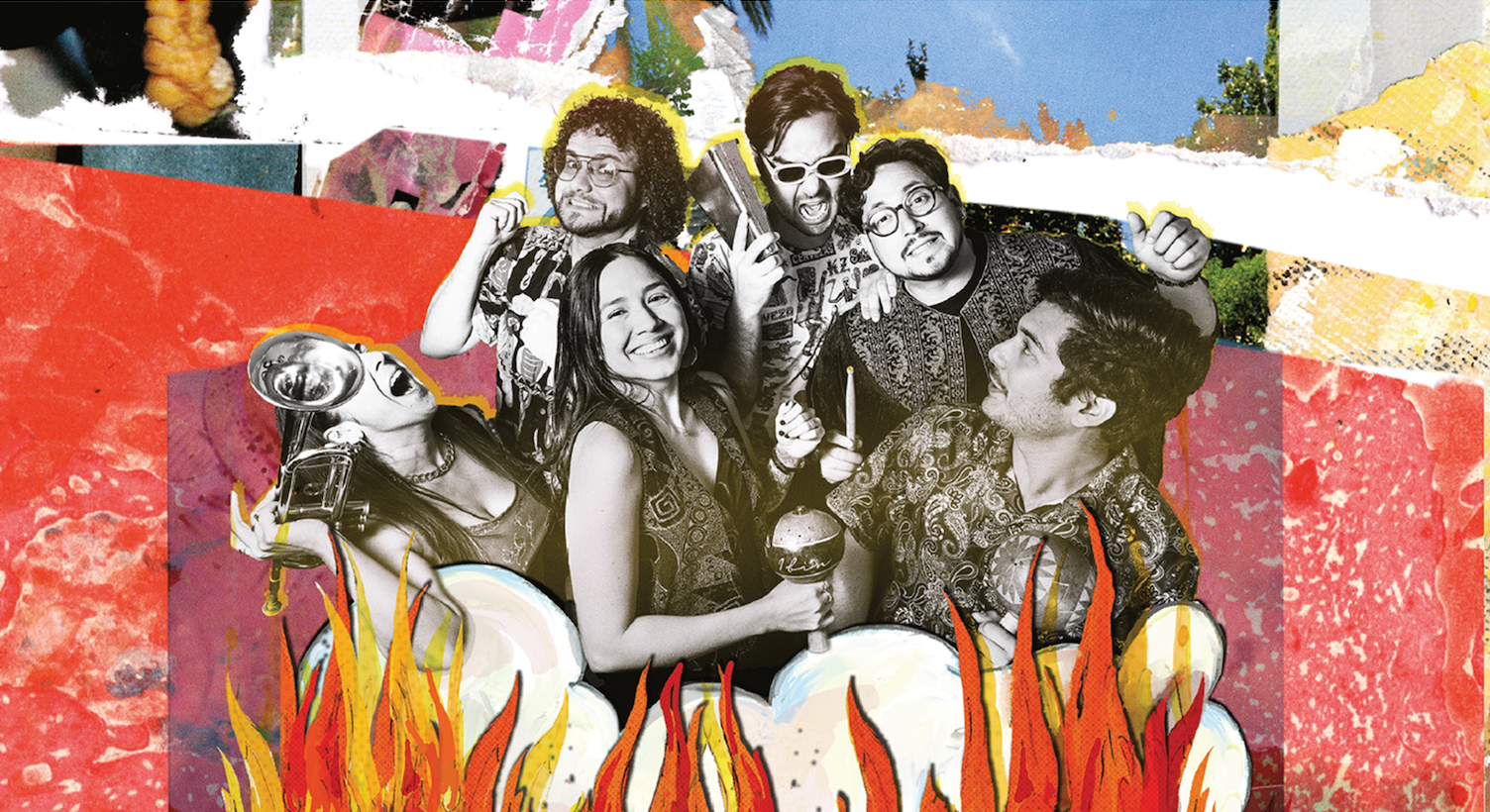
And just like the name suggests, sancocho being a beloved Latin American stew, and “trifásico” referring to its multi-layered construction—this record is a dish best shared. Each track holds the fingerprints of the collective: Andrea Chamorro (maracas/percussion), Jocelyn Waugh (trumpet), Ricardo Jose Perez Guerrero (guitars/effects), Daniel Hernandez Pinto (bass guitar & percussion), Daniel Ruiz (drums & percussion), Jaime Millan Ronchetti (guitars), Myles Bigelow (percussion), Sangito Bigelow (percussion), Tobias Soley (saxophone).
Together, they build something that feels deeply rooted, yet endlessly open.
Ahead of the album’s release and national tour dates, we connected with Empanadas Ilegales about how Sancocho Trifásico was made, the stories woven into its sound, and why joy—especially when shared through dance—can be a revolutionary act.
TIGRE SOUNDS: Sancocho Trifásico feels like a sonic stew of stories, influences, and identities. What does the album title mean to each of you—and how does it reflect your creative process as a band?
EMPANADAS ILEGALES: Daniel Hernandez Pinto: “Sancocho (soup) is my mother’s favorite dish … so there’s that! I grew up eating it in Colombia, and it’s been around me since I can remember. In a way, this album conceptually alludes to just that: the memories, the stories we grew up with.
Sonically, it’s more abstract—like a tryptic. It’s a blend of phases, sounds, and emotions. Ultimately, as Mateo Gómez Pinto (the artist behind our album cover) says, ‘You can’t tell if you’re in a Latin dance party or the apocalypse.’”
Daniel Ruiz: “Sancocho Trifásico is exactly what it sounds like—a wild, rich mix of flavors, cultures, and energies, simmered over time. To us, the title represents the messy beauty of collaboration. Each of us brings our own spice, our own rhythm, our own stories to the pot.
The creative process behind this album was intuitive and playful. We weren’t trying to fit into a genre—we were chasing connection. Joy. Movement. At the end of the day, it’s a celebration of freedom: to create, to be vulnerable, to dance like nobody’s watching.”
Ricardo Jose Perez: “Sancocho Trifásico is, linguistically, emotionally, and musically, the result of many moments, places, thoughts, and feelings. The name came to us at the very end, once all the songs were written and recorded. What we ended up with was a flavorful soup of sounds and ideas—each captured in distinct places and moments.
It’s truly a soup of bits and pieces from each of us, coming together to create a delicious, juicy, tri-phasic musical experience.”
Jaime Millan Ronchetti: “The name captures the spirit of the album. Like any good stew, nothing was measured—just what felt right.
The stew wouldn’t be complete without Andrea, Jerlin, Jocelyn, Myles, Sanguito, and Tobias—friends, collaborators, and key ingredients in this wild recipe. We recorded it raw—not to prove anything, but to capture something real. Sancocho Trifásico is for those craving music that simmers at the edge of the unexpected but feels just right.”
TIGRE SOUNDS: Your music bridges genres, cultures, and even continents—from Colombian cumbia to West Coast psych, Persian melodies to Peruvian rhythms. What guides your hand when weaving these seemingly distant threads together?
EMPANADAS ILEGALES: At the core, it’s always been about two things: a deep musical connection and experimentation. From the start, we were just a group of friends jamming with whatever gear we had—improvising and learning from each other. Blues rock, surf, hip-hop, jazz—it was all in the room. But what set us apart was our shared Latin American heritage. Eventually, we felt our roots calling, and made the choice to lean into that.
From then on, we approached music as a kind of cultural collage. We wove in Colombian cumbia, Peruvian folk, Afro-Latin rhythms—and combined them with what we discovered here in Canada: psychedelic rock, global grooves, funk. What guides us is a blend of instinct and intention—always honoring where we come from, while staying open to where the sound wants to go.
TIGRE SOUNDS: There’s a deep sense of folklore and storytelling in your work. What role does cultural preservation play in your music, and how does it show up in your songwriting or live performances?
EMPANADAS ILEGALES: It’s essential. We’re always guided by foundational rhythms and the spirit of Latin American music—but we also see ourselves as modern storytellers, experimenting with new forms.
Cultural preservation means bringing visibility to the lesser-known corners of Latin music history. One example is our track “Suto Ta Kandá,” featuring Jerlin Torres Salgado from San Basilio de Palenque, Colombia. Palenque is the first town in the Americas founded by Africans who freed themselves from slavery, and it has preserved its own language and culture. We brought the Palenquero language into our music—something you rarely hear in psych or tropical fusion.
In our live shows, we tap into traditional Colombian cumbia percussion—but push deeper than the surface, weaving rhythmic textures that carry the music and allow melodies to explore freely.
TIGRE SOUNDS: “Gher Bede (La Sanguijuela)” transforms Tchaikovsky into something hypnotic, almost trance-like. How was that track born and how does it connect with your Middle Eastern audience in BC?
EMPANADAS ILEGALES: “Gher Bede (La Sanguijuela)” came from a playful moment at an art gallery with Iranian friends. Someone said “Gher Bede,” which means “shake it” or “groove”—and we immediately thought, that’s a song name.
The melody actually started years ago. Jaime loved Swan Lake and wanted to bring its drama into a new world—something Latin, groovy, and modern. As it evolved, we layered in Persian grooves and Egyptian melodies, filtered through our psychedelic tropical lens.
The “La Sanguijuela” part—The Leech—adds a darker, surreal edge. It’s hypnotic, strange, and slowly gets under your skin. Being surrounded by a strong Iranian and Middle Eastern community in BC made this track feel even more meaningful. It’s about connection through rhythm—familiar and new.
TIGRE SOUNDS: You’ve built your sound through years of late-night jams, rooftop sessions, and after-hours parties. How has the Vancouver scene shaped Empanadas Ilegales?
EMPANADAS ILEGALES: Vancouver shaped us as much as we shaped our sound. It wasn’t always easy—live music isn’t the heartbeat of nightlife here—but that challenge pushed us. We had to earn our space.
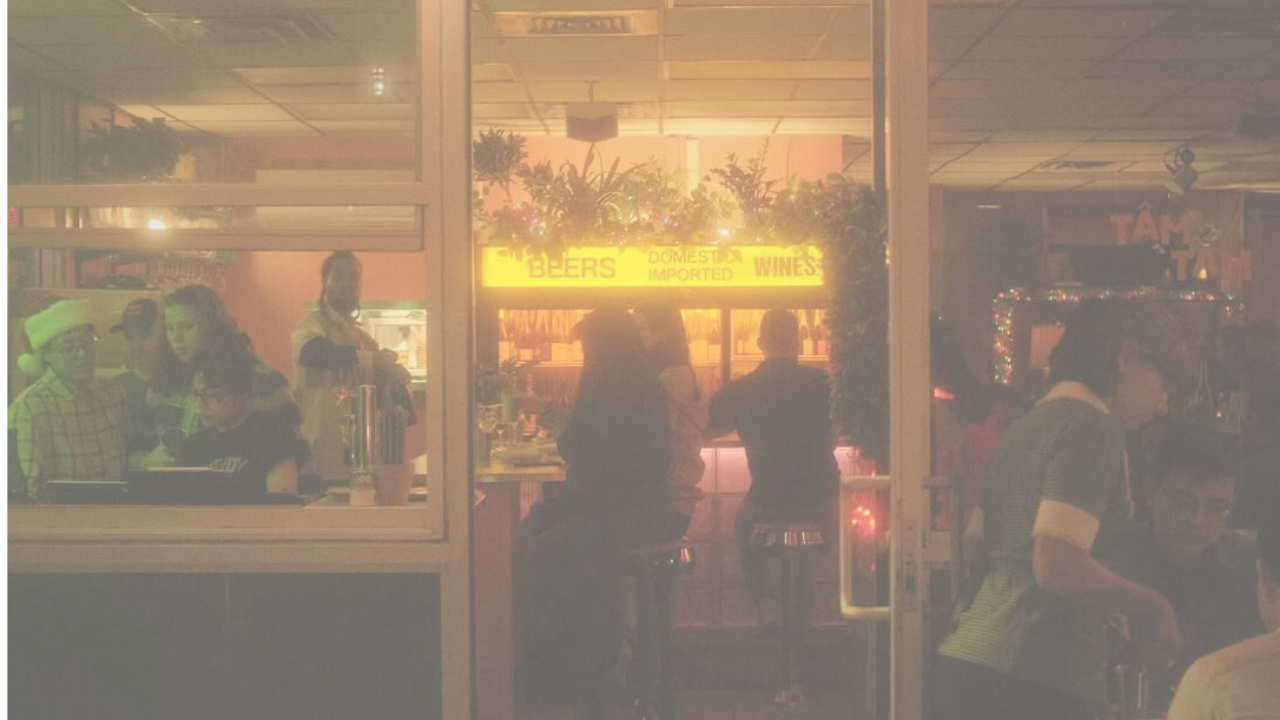
Empanadas Ilegales was born in house parties and listening sessions. The early shows at La Casa del Ritmo, and then eventually at festivals and bigger venues, taught us how to connect. We saw people show up and let go on the dance floor—and that fueled us.
The limitations made us creative. Every rooftop jam, every packed room, every quiet night—it added a layer. Vancouver taught us to trust our instincts and give it everything on stage.
TIGRE SOUNDS: From “Chancletazo” to “Cumbia Rajá,” your music pulses with humor, resistance, and joy. What emotional thread ties this record together?
EMPANADAS ILEGALES: Liberation. That’s the thread. Emotional, physical, and collective. We believe joy is a form of resistance—and laughter, rhythm, and dance can be revolutionary.
Every track is an invitation to reconnect—with your body, your roots, and your community. When we play live, we want people to drop their worries and sweat it out. Dance is a memory. Joy is medicine. And music is the reminder that you’re not alone.
In a world that often feels divided and dissonant, Sancocho Trifásico reminds us that music, when stirred with soul, can be a unifier. It can carry memories, melt borders, and summon joy from the roots up. With this album, Empanadas Ilegales haven’t just created a collection of songs. They’ve served up a collective ritual: one of remembrance, resistance, and rhythm.
So turn up the volume. Let the soup bubble. And serve yourself a big, bold dish of Sancocho Trifásico. Your body already knows the steps.
Photos by Sebastian Figueroa.