



There is a sacred place where music returns to what it once was: a cultural and transcendental experience, an original and largely unrepeatable creation, both for the performer and the listener. There, music ceases to be a mere market product, calculated and copied. There, algorithms don’t work. There, AI goes crazy and useless. There, music connects with the past, with its history and its roots, but it also opens a path to the future. There, in that space and at that intersection of time, music regains a bit of its aura. That sacred place, precisely, is where Cochemea invites us with Vol. III: Ancestros Futuros.
Ancestros Futuros unfolds vital, magnetic percussion, the kind of rhythmic sounds that pulse through your veins, opening doors to other worlds and making you dance, first on your own, within yourself, and then together. Organic and flexible pillars of the beat where the bass groove sways and the wind instruments thread mystical melodies. Everything is magical and enveloping, like fire on a night of healing rituals. Like the soundtrack of a dream. An inner journey of spiritual jazz to constellate and connect with our ancestors — in Cochemea’s case, with his Yaqui roots, an Apache tribe from Mexico.
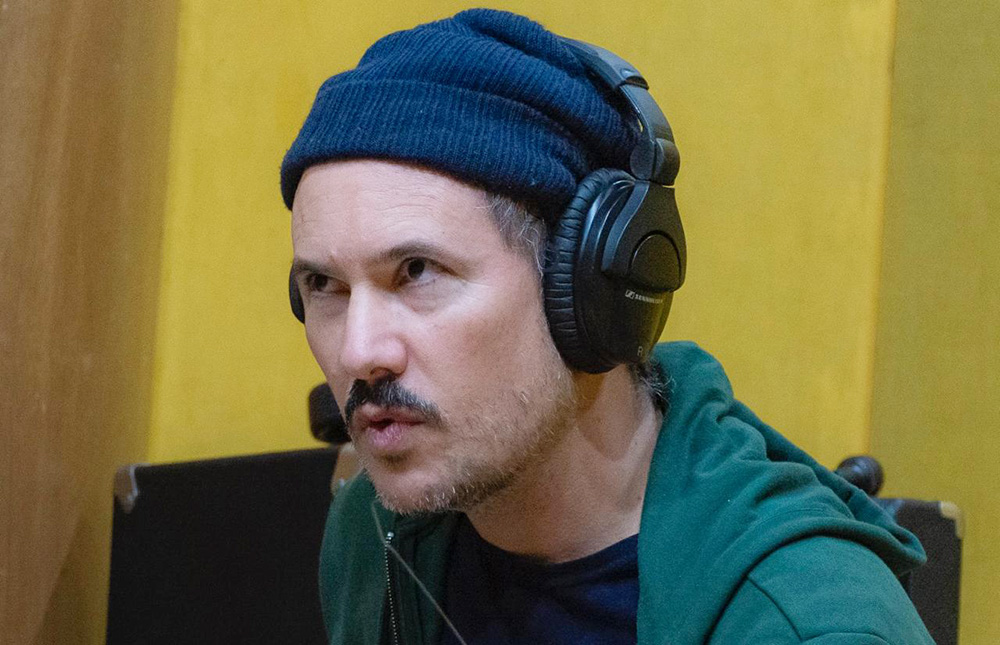
Ancestros Futuros is the third and final chapter in Cochemea Gastelum’s epic quest to explore and express the spiritual connection between his art and ancestry. Here, the musical journeyman enlists a band of longtime collaborators: a powerful octet composed of New York-based percussionists and members of Daptone’s famed rhythm section. He also collaborated again with his trusted producer: Gabriel Roth, also known as Bosco Mann, who took on the task of recording and mixing the album live on 8-track analog tape.
Born in Southern California with Native American roots, Cochemea Gastelum studied music from a young age, even briefly attending Berklee in Boston. The formative ‘90s found him playing in both the avant-garde punk band Creedle and Robert Walter’s 20th Congress. He moved to New York City in 2002, where he quickly became part of Brooklyn’s burgeoning Afrobeat and soul scene. Known primarily as a sax-player space warrior, Cochemea evolved over the years into a multi-instrumentalist and arranger, skills he poured into his 2010 solo debut, The Electric Sound of Johnny Arrow. Around that time, he also starred in a Broadway musical about Fela Kuti and established himself as a session musician, recording for high-profile producers like Quincy Jones, Mark Ronson, and Rick Rubin.
Daptone Records marked a turning point in Cochemea’s career. It became his home for recordings and his central hub for projects. Of course, his two previous albums, All My Relations (2019) and Vol II: Baca Sewa (2021), were released there. Cochemea became an invaluable asset to the Brooklyn-based label, recording and touring with acts such as Antibalas and The Budos Band. He also added his saxophone to The Dap-Kings, the band Bosco Mann formed to support the great singer Sharon Jones. It’s no coincidence that Bosco, co-founder of Daptone, was the one who helped him develop this spiritual solo project connected to his ancestors and the roots music that shaped him.
TIGRE SOUNDS: The album’s title reveals a poetic idea, an idea of temporal intersection: the past projected into the future. What’s the concept behind Ancestros Futuros?
COCHEMEA: I think of each record as a chapter in a larger story that builds together and is in dialogue with itself. My work draws on oral history, ancestral memories and dreams, often intertwining them, as a way of engaging with time as speculative history. My previous albums explore different notions of temporality — mainly past and present. With Ancestros Futuros, I wanted to look forward, but not in a linear sense. Much of the album is shaped by the idea of survival as a continuum across generations. So, I wanted to create a vision of ancestral survival in the future, moving through an indeterminate past and present.
TIGRE SOUNDS: You put together an eight-piece band with a unique sound, featuring percussionists from Daptone’s rhythm section. How did this lineup come about?
COCHEMEA: It came together very organically. Most of us have been playing together, in some form or another, for many years. So, there’s already a familial aspect to the group. When we recorded All My Relations, we came into the studio with no written material and improvised. As soon as we all got in the room and started playing, I felt something really special. We worked out the arrangements quickly and recorded it live. I later wrote some songs that we recorded to round out the album. With the last two records, I’ve tried to stretch myself compositionally. Our current process usually starts with me bringing in ideas — melodies, rhythms, or both — and working them out with Gabe, aka Bosco Mann, who produces and engineers the records. From there, I’ll bring the songs to the band and we’ll fine tune the arrangements together. It’s a very collaborative process, and over time, we’ve developed a musical language that I think has matured on this album.
TIGRE SOUNDS: Ancestros Futuros was recorded live on 8-track analog tape, as part of a production by Bosco Mann that gave more warmth to Cochemea’s sonic narrative. How did you come up with this way of working?
COCHEMEA: Having worked with Bosco for many years, this is his way of working and what we feel most comfortable with. From a performance perspective, I like the process of recording to tape because it forces us to work with what we have, make decisions quickly, and not overthink it. I think the music benefits from being captured live in the moment, too. There is a lot of preparation involved, but I intentionally leave room in the arrangements for the band’s input and for spontaneity, so the magic can come in.
TIGRE SOUNDS: Cochemea’s sound universe is very spiritual, with an indigenous feel and elements of jazz, but there are also countless sounds from world roots music. What influences are important to highlight in your music?
COCHEMEA: Everyone in the band brings a deep knowledge of rhythms along with their life experiences. There are a lot of diverse influences that are woven into the fabric of the music. The song “Ancestros Futuros,” for example, is based on a Venezuelan waltz in the A section and shifts into a Huapongo rhythm from Mexico in the middle. As a horn player and composer, I’ve been deeply influenced by Gato Barbieri and Jim Pepper, as well as Alice Coltrane and Yusef Lateef. Conceptually, the narrative of the albums — and the trilogy as a whole — is informed by my worldview and lineage. My father was Yaqui and my mother is of mixed native ancestry. So there is a through-line musically and conceptually with Indigenous folkloric rhythms, but also in the blending of different forms and traditions.
TIGRE SOUNDS: You’ve been through several projects in your career. What led you to embark on this spiritual journey inspired by ancestral memories and family stories?
COCHEMEA: I’ve always felt there was something inside that wanted to express itself. Over the years, I’ve played in a lot of different contexts, but at a certain point, I felt the need to make something more personal. The idea had been with me for a long time, but I wasn’t sure how to express it. For this project, Bosco really helped bring it into reality. He encouraged me from the beginning. Once we gathered the musicians and I began composing specifically for these albums, the inspiration and narrative began to take shape naturally. A lot of my family history has come to me in fragments and I wanted to make space to explore the gaps of knowing and not knowing, of loss and recovery. For me, the work is both an act of survival and a seeking of wholeness in these zones of fracture.
TIGRE SOUNDS: We’re living in uncertain times for culture and art, amidst so much soulless viral content and the advent of AI automation. How do you conceive, record, and release an album without getting lost in this impersonal flurry of technology sweeping the music industry? What tools do musicians like you have to deal with this reality?
COCHEMEA: It can feel challenging at times. I think what grounds me, ultimately, is the work. It’s a spiritual process and I try to serve that first and foremost. I’m grateful to have a lot of support from people I love and trust. My aim, in whatever art I make, is to make it as good as I can and stay true to the idea of how I think it should be. It may not be for everyone, but I believe if it comes from the heart, it will reach the people who are open to receive it.
Breathe in the power of Vol III: Ancestros Futuros now and don’t miss the chance to see Cochlea live on October 11 at National Sawdust in Brooklyn, NY. Grab your tickets now.