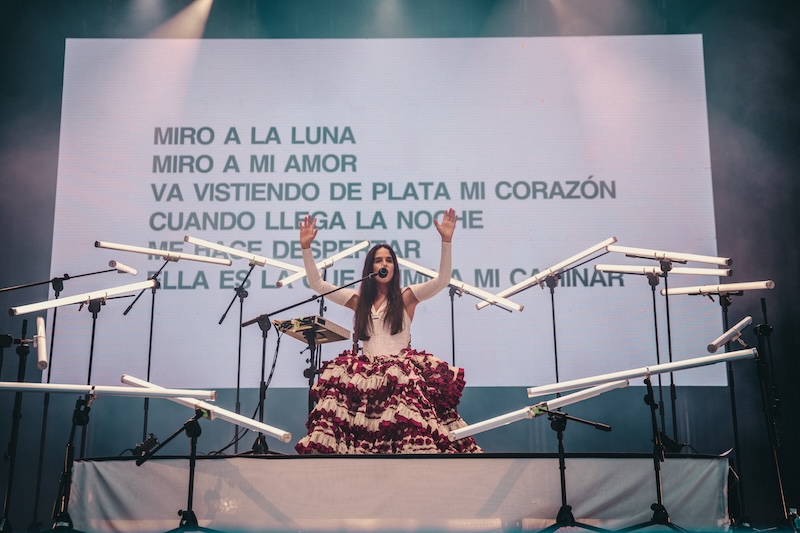




A staccato guitar line, in a cool jazz key, invites the bass drum to jump on top and never let go. From then on, the atmosphere is set, relaxed yet groovy, almost lounge-like. The pulse starts off subtle but always irresistible. Of course, it will grow. Janeiro does its thing: enchanting with a beautiful melody, sung with that vibe that only the Portuguese can bring, gently enveloping everything like a beach breeze. Three minutes have passed, and no one wants to let go of that catchy beat. So the singer-songwriter puts his guitar aside to continue singing while clapping and dancing with the audience. Now, the transition to electronic music is complete. It’s just one song, a live performance of “Solidão”, but it’s enough to exemplify the magical musical cosmos that revolves around Janeiro.
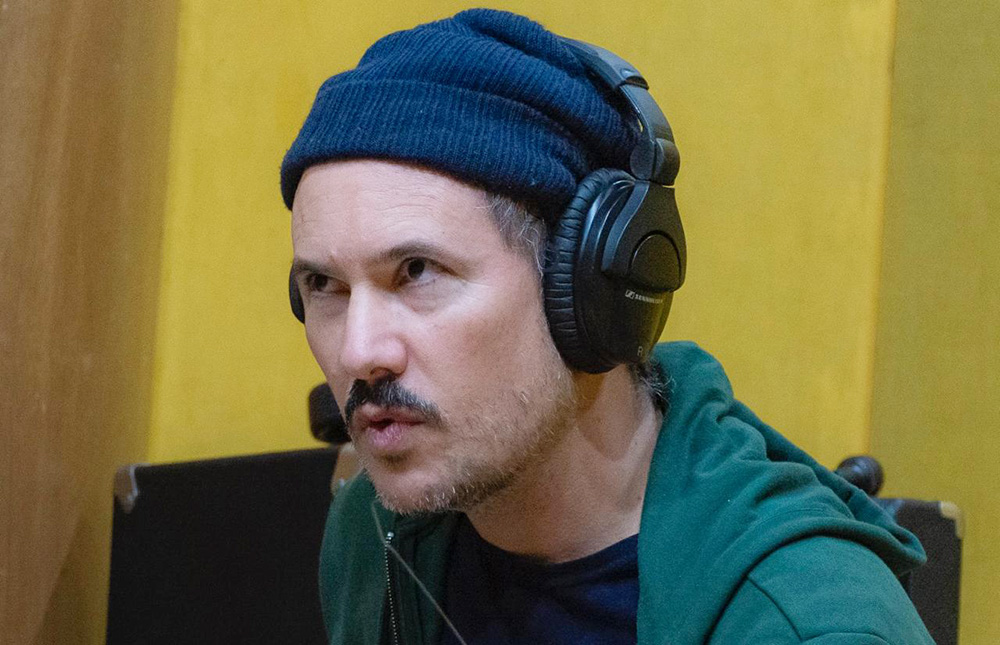
A producer and multi-instrumentalist, Janeiro emerged exactly a decade ago with his self-titled debut EP. Shortly after, with the release of his first full-length album, 2018’s Fragmentos, he was considered one of the great revelations in Portuguese music — he reached the final at the Festival da Canção that same year and his performance quickly surpassed one million streams. Devoted to memorable melodies and meticulous production, Janeiro has since demonstrated his talent for fusing sounds from different worlds: from jazz to bossa nova, from electronic textures to folk intimacy, from Portuguese song traditions to Brazilian popular music. Sophisticated soundscapes that give rise to lyrical delicacy, one of those rare places where the organic and the computerized can blend naturally. His sweet, distinctive voice immediately stood out and gave his work an even more personal touch.
Also around 2018, the Janeiro Sessions appeared. The project not only allowed him to collaborate with other musicians but also to deepen his artistic identity. These sessions, which began as homey gatherings for conversation and music, evolved into concerts, transforming the living room into a shared space between guest artists and the audience. In 2020 he released Sem Tempo, an album that could become double, at two speeds, with its acoustic counterpart titled Com Tempo. Two years later, he actually turned it into a triple album by adding an instrumental version. In 2023, Janeiro released Protocolar Vol. II, an album in collaboration with Brazilian singer-songwriter Paulo Novaes, somewhat in the vein of everything he had been doing in the Janeiro Sessions.
Originally from Coimbra, a central riverside city that was once the country’s medieval capital, Henrique Janeiro arrived in Lisbon at 18 to study jazz and musicology. It was also around this time that he began exploring his own musical universe. More than a decade of experiences, recordings, albums, sessions, and live performances followed. Until one day, Janeiro wanted to get away from the urban hustle and bustle and moved to Alentejo, in the south of Portugal, in search of introspection and a greater connection with natural surroundings. From this change of environment came more mature and meditative songs — a personal growth that carried over into his music. Thus was born FUGACIDADE, also inspired by the concept of impermanence. Released in 2024, this third album explores the contrasts between city and nature, speed and contemplation.
TIGRE SOUNDS: You often link your creative processes to revelations, inner journeys and moments of meditation. Is FUGACIDADE the album that most exalts that bond?
JANEIRO: FUGACIDADE was the first album born from a deeper kind of silence. For the first time, I wasn’t making music to prove anything or to make money out of it. I was simply living more slowly, far from the city, and that gave me a creative freedom I hadn’t felt in a long time. There’s a phrase that guided me: “art is too beautiful to make a living from it.” Carlos Paredes, the classical Portuguese guitar player, used to say it. Once I stopped depending on it, I found myself again in it. FUGACIDADE is the sound of someone who has accepted impermanence — the fear of missing out, of losing — and somehow found peace within that instability.
TIGRE SOUNDS: It’s been a decade since the release of your self-titled debut EP, recorded in your home studio when you were 20. Looking back, how do you see everything that happened up to now?
JANEIRO: I see a super beautiful, but also difficult journey. I lived through the innocence of believing that good music was enough to be heard, then the frustration of realizing the system doesn’t always reward truth. There were phases where I felt out of place — in the industry, in teams, even within myself. But there were also magical moments, like the Festival da Canção, which showed me how deeply the audience could connect. After that, everything that happened came with a context. Today, I look back with tenderness. That 20-year-old kid had no idea of the road ahead. I talk with that kid a lot of times, almost every day. I can assure you that he is proud of me and that I’m proud of him too.
TIGRE SOUNDS: How would you describe each of your three albums: Fragmentos (2018), Sem Tempo (2020), and FUGACIDADE (2024)? What moments in your life do you associate with each one?
JANEIRO: Fragmentos was the sound of wonder. I was stepping into the music industry, experiencing bigger stages, and wanted to try everything — collaborations, aesthetics, sounds. It’s a collage of different pieces of me. As the name says, fragments of me that when put together showed me the way to go. Sem Tempo was born during the pandemic, but even before that it already carried a kind of exhaustion. It speaks about the pressure of always keeping up, always delivering, never stopping. It’s probably my most restless, urban record. FUGACIDADE is the opposite. It was born in the countryside, in silence, in the feeling that I was finally making music just for the sake of breathing. It’s the album where I feel most whole.
TIGRE SOUNDS: Who are your greatest influences? Those artists who inspired you or even motivated you to make artistic choices you wouldn’t have made before…
JANEIRO: Rui Veloso — for his devotion and timelessness. Caetano Veloso — for his freedom and sensitivity. James Blake — for his mix of vulnerability and sonic design. And artists I’ve worked with, like Paulo Novaes, Meta or Salvador Sobral, who challenged me to step out of my comfort zone. Lianne La Havas — for making the album of one of my most beautiful relationships. Rosalía — for taking the roots to the world and expanding everybody’s minds. (((0)))) is an artist that I listen to a lot, too — her connection to the spiritual side and incredible vibe make her unique.
TIGRE SOUNDS: Your music combines different genres, moods and formats: organic and electronic, traditional and avant-garde, popular and obscure, sophisticated and simple, jazz and pop, bossa nova and fado… How did all these things come together and intersect in your mind?
JANEIRO: I think it’s because, to me, they never really felt separate from each other. I grew up listening to jazz with my grandparents, MPB with my mum, rock with my dad, and discovering electronica on these beautiful endless portuguese nights. I always felt genres were just different ways of saying the same thing — talking about our emotions, our habits, our worst side, love… I treat the song as raw material, something that can be shaped with a Portuguese guitar or, alternatively, with granular synthesis, depending on what it needs. Blending the organic with the electronic is exactly what I’m looking for.
TIGRE SOUNDS: You write personal songs, with delicate lyrics. But you also work as a producer and sound designer. Is it easy for you to step outside your bubble to delve into someone else’s music, or to work based on what someone else asks of you?
JANEIRO: Surprisingly, yes. When I produce for others, I can let go of my ego and simply listen to what the song is asking for. I also teach LOGIC PRO X workshops, a well known DAW, and while I’m producing for others, there I’ve learned the importance of listening, adapting, and serving someone else’s creative process. It’s almost like taking a break from my own emotional labyrinth. It’s about treating others’ albums how you’d treat your own album — with presence, ease, and time.
TIGRE SOUNDS: As an artist and producer, how do you view today’s music industry? Do you like the way music is discovered and consumed? Do you think social media helps or hinders this process of discovering and listening to something new?
JANEIRO: It’s a double-edged sword. Social media allows a direct connection with the audience, which is great for independent artists. Globalization and the democratization of information made everything accessible to everyone. But it also creates a constant pressure to be present, visible, viral. Music has become content — and that sometimes kills its soul. Still, there are alternative paths — and I believe in them.